


Fund Accounting: An Essential Concept in GASB Principles
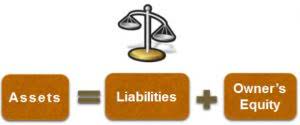
To properly track revenue and expenses separately, you will need to setup a fund accounting system and a specific code for these transactions. This type of system provides organizations with a method to measure how they are meeting their goals. It is important to note, fund accounting nonprofits must use this revenue in the way the donor intended.

Choosing the Right Fund Accounting Software

These include (a) investment trust funds, (b) pension (and other employee benefit) trust funds, (c) private-purpose trust funds, (d) custodial funds and (e) external investment pool funds. Additionally, fund accounting can break out each ministry’s financial statement. These funds are often seen as little mini companies within the larger organization. Each mini company has their own self balancing set of accounts, thus can provide a full set of financials at its own level. Fund accounting separates resources into distinct funds tracked by donor restrictions or purposes, emphasizing accountability over profitability.
- Using online software can simplify the process by automating various tasks and streamlining workflows.
- For example, a nonprofit must manage restricted donations separately from operating funds.
- The specific details for these different activities will vary, in some cases substantially, between types of funds, but they will all generally fall into these two categories.
- In a properly set-up system, this fund would have its own asset, liability, equity, income, and expense balances, making it a completely separate entity within your organization.
- Grants like this are reported for each division’s 990 where grants that are owned by the same entity aren’t reported on the 990 because they are just movement between funds.
- The chosen system must streamline daily accounting tasks while being scalable and user-friendly.
- Mastering nonprofit accounting is not just a task; it’s a commitment to your mission’s integrity.
Understanding the Statement of Financial Position
For example, if the fund attribute is the General fund, Bookkeeping for Startups then we only look at the self balancing accounts for the General fund. As you can see from this picture representation, each fund and its accounts are isolated. The General fund’s assets do not commingle with the Building fund’s assets. Keep in mind this is a picture representation to simplify the explanation. You first have the three funds annotated in the top three boxes under the Organization box. The next three boxes noted “Self Balancing Chart of Accounts…” is where these self balancing accounts isolate themselves.
- When you set up funds in your chart of accounts, they’ll show on your financial statements as well.
- This article delves into the fund accounting basics, highlighting its principles, processes, and the importance of accurate financial reporting.
- However, integrating fund accounting software with other systems can be challenging, especially with legacy or non-nonprofit-specific systems.
- And fund accounting ensures that you’re maintaining the degree of transparency required of you.
- Now we will tackle this part of the definition — “In this method, a fund consists of a self-balancing set of accounts“.
Co-sourcing benefits for Fund Managers
Although a local government has to report only one general fund in its external financial reports, the government can have multiple subfunds for its internal managerial purposes. These managerial subfunds should be combined into one general fund for external financial reporting. Whenever the question asks something like what is left over, what is remaining, or we need to know the balance remaining, it means you need to look at the Statement of Financial Position.
- Once the project is completed or the event occurs, the funds become available for general use.
- Download our Fund Accounting brochure to discover how our cloud-based solution, built within Microsoft’s enterprise framework, can help empower superior investment decisions.
- In the world of nonprofit accounting, it’s vital to grasp the differences between various fund types.
- For the organization, this helps to determine whether investing policies are correct for the current markets, whether administrative fee revenues are covering expenses, and how they are spending.
- This accounting system helps them demonstrate a more significant fiscal responsibility to their resource providers.
- But there is also a strong need for non-profits to monitor the availability of funds that are designated for each individual program.
When it comes to fund accounting for nonprofits, it’s crucial to ensure accuracy, transparency, and compliance. Tracking where fund money goes and what’s left is important, but nonprofits also need specific reports to demonstrate their fund accounting and show accountability. In fund accounting, one of the main principles is distinguishing between restricted and unrestricted funds. Fund accounting is used by nonprofit organizations to track money and make sure it’s being used as intended. Generally speaking, none of these organizations focus on earning a profit, and they’re all exempt from federal income tax. But to maintain that status, they have to reinvest all of their funding into their missions, and fund accounting helps them accomplish that goal.

Contact our team today to incorporate our leading accounting software, which is tuned to cover and meet all your specialized needs, to strengthen and simplify https://www.bookstime.com/ your accounting processes. Many non-profit organizations start with publishing a well-defined mission as part of receiving their 501(c)(3) status from the IRS. Whether that mission is supporting education, feeding the hungry, or even protecting our global environment, the goal is always to build an impact for good in our world. Fund accounting and CRM software can make all the difference in your record keeping.